Scarsdale
The Chemistry of DeathScarsdale is Manham’s elderly vicar, a stern religious figure who becomes the village’s most prominent public voice during the investigation into the murders of Sally Palmer and Lyn Metcalf. His rise from parish preacher to advocate of self-directed action gives him influence at the very moment fear and suspicion are destabilizing the community; his calls for unity and protection also help make vigilantism seem like a communal duty.
Identity and Place in Manham
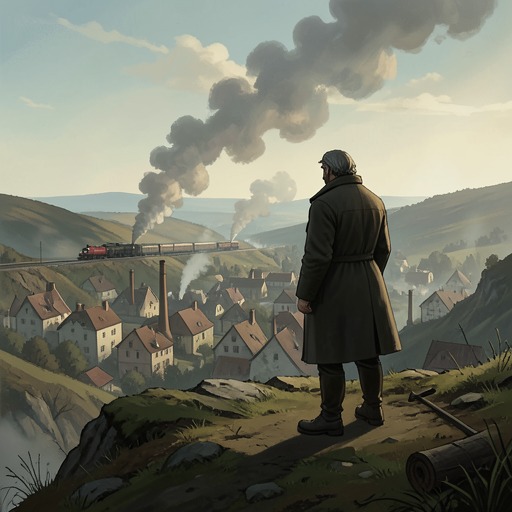
David Hunter initially sees Scarsdale as an elderly, dour man whom he cannot bring himself to like. The vicar has been in Manham for years and retains a loyal, if small, congregation. His familiar place in village life is visible in ordinary scenes: he stands at the church doorway as people arrive for an evening service, while David, passing on his way home, acknowledges other villagers on the churchyard path. Scarsdale is thus an established local presence before the murders make him a figure of wider consequence.
His influence does not rest on formal authority over the investigation. Rather, he can address a settled community in the language of shared belief and obligation. As events intensify, his church and the village hall become platforms from which he interprets the crisis for residents, journalists, and the wider public. The shift matters: Scarsdale is not simply a cleric responding privately to tragedy, but a speaker who increasingly claims to represent Manham as a whole.
Sermons During the Investigation
After Sally Palmer’s body is discovered and Lyn Metcalf is missing, Scarsdale announces at the pub that he will hold a prayer service for both women. He addresses the men gathered there and pointedly looks over the women without acknowledging them. He expects the pub’s patrons to attend, framing their presence as a way to respect the dead and support the living. Even before the service, he presents attendance as a public responsibility rather than a private choice.
The service takes place in a packed church. David observes that what was supposed to be a prayer gathering has become an occasion for Scarsdale to deliver his own stern interpretation of events. He invokes the murdered Sally and the still-missing Lyn, then turns the congregation’s attention to the question of why the women have suffered. Rather than offering an answer grounded in the investigation, he asks whether the tragedy reflects judgement and presses the congregation to consider its own responsibility.
Scarsdale argues that the community has permitted evil to move freely among its members by choosing to ignore it. His sermon places blame not on a named suspect but on collective moral complacency. That distinction gives his words broad reach: listeners are asked to examine themselves even as the killer remains unidentified and Lyn’s fate uncertain. The camera flashes and the presence of reporters make the sermon public as well as religious, and David suspects Scarsdale may be playing to them. The scene establishes the combination that will define his later influence: moral accusation delivered with a keen awareness of an audience.
Claim to Speak for the Village
Scarsdale soon approaches David in the churchyard, where Tom Mason is also present. He says parishioners have asked for a united front, especially in dealings with the press, and proposes that the village needs a spokesman. David understands that Scarsdale is positioning himself for the role. The vicar presents the proposal as a response to circumstances still unfolding, saying that God has not finished with Manham, and tells David that his support would be welcome because he is an important figure.
The exchange reveals that Scarsdale is seeking more than a platform for religious consolation. He wants to shape how Manham presents itself to outsiders, and he recognizes David’s standing as useful to that effort. David, however, does not simply endorse him. The offer leaves the question of who has the right to speak for the village unsettled, even as Scarsdale proceeds to act as though the role is his.
As public attention grows, Scarsdale becomes Manham’s most visible spokesperson. While others avoid the media, he readily appears before cameras and microphones. He criticizes the police for failing to catch the killer, condemns what he calls the community’s moral complacency, and denounces the press for exploiting the tragedy. David notes the irony of Scarsdale criticizing publicity while repeatedly placing himself before it. Nevertheless, the vicar gains support: his forceful expression of the village’s anger resonates even when, in David’s assessment, the argument is stronger in intensity than in reason.
The Village Meeting and Its Consequences
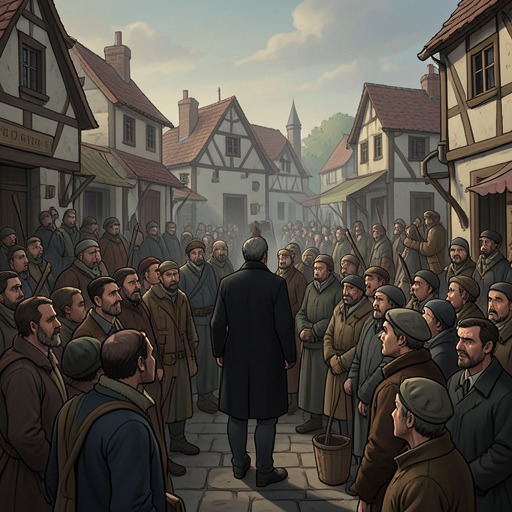
On the Monday after Lyn Metcalf’s body is found, Scarsdale holds a public meeting in the village hall. A memorial service for Lyn has taken place in the church the day before. Scarsdale had not allowed the media into that service; David privately wonders whether this was intended less to protect the bereaved than to make reporters feel excluded. By the time of the meeting, however, Scarsdale is addressing a crowded hall with the press present.
He tells the gathering that two women known to the community have been killed and that the person responsible is likely to be from the village. He presents the police as unable, or perhaps unwilling, to take the necessary steps, then asks residents how many more women must die before they act. Marcus Metcalf is beside him, and Scarsdale invokes the loss suffered by Marcus and Lyn’s family to make the danger immediate to everyone in the room. His appeal turns fear for particular victims into a warning that any family in Manham could be next.
Scarsdale then urges residents to protect themselves if the police cannot protect them and to root out the killer. The meeting erupts into applause and shouted approval. David sees triumph in the vicar’s expression as he surveys the response, and leaves without drawing attention to himself. The scene marks a decisive change in Scarsdale’s position: he has converted his role as public interpreter of the crisis into an appeal for collective action.
Influence and Narrative Significance
The village’s response shows the consequences of Scarsdale’s rhetoric. After his call to action, Carl Brenner arrives at the pub with Dale Brenner as part of a larger group that has begun patrolling Manham by day and night. Carl presents the patrols as necessary because the police are doing nothing, echoing Scarsdale’s argument in cruder terms. The evidence identifies the patrols with the movement Scarsdale urged into being, though it does not establish that he personally organizes or directs every patrol.
Scarsdale’s growing prominence unfolds alongside a community already losing trust in itself. Suspicion intensifies old rivalries, and public fear makes residents receptive to a simple account of danger: the killer is among them, the authorities are failing, and the village must defend itself. Scarsdale gives that fear a moral vocabulary and a public direction. His sermons initially call for self-examination; his meeting turns that appeal outward, toward finding and confronting an enemy within the community.
His role therefore holds an unresolved tension. He speaks for grief, outrage, and solidarity, and his appeal arises amid real murders and a missing woman. Yet by declaring that someone local is probably responsible and urging residents to act, he helps move a frightened population beyond shared mourning toward vigilantism. The narrative presents him neither as the investigator nor as a neutral observer, but as a preacher whose ability to command attention shapes how Manham responds to uncertainty.